The Pontiac Firebird and the Golden Age of the Muscle Car
Before emissions standards tamed the V8, there was a brief, glorious era when American cars were pure, unapologetic power.
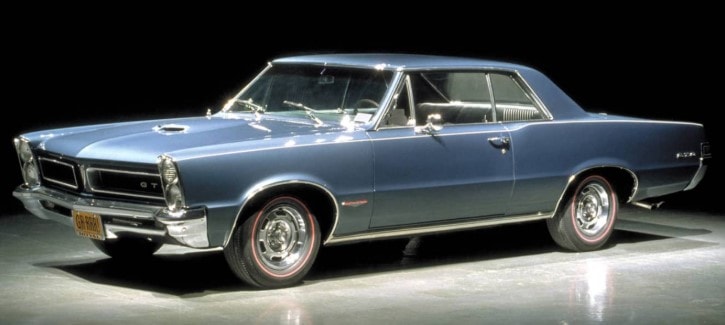
The golden age of the American muscle car lasted roughly from 1964 to 1974. A decade of displacement — big engines, rear-wheel drive, and a philosophy that said more was always better. The Pontiac GTO, the Ford Mustang, the Dodge Charger, the Chevrolet Camaro, the Pontiac Firebird. These were cars built around a simple premise: put the biggest possible engine in the lightest possible body and see what happens.
The Firebird arrived in 1967 as Pontiac's answer to the Mustang, and by the mid-70s it had become something more than a muscle car. The Trans Am variant, with its hood-mounted tachometer and its screaming chicken decal and its 400-cubic-inch engine, was the last great statement of American automotive excess before the oil crisis and emissions regulations changed everything.
The muscle car wasn't transportation. It was a statement about what America believed — that power was good, that speed was freedom, that the road belonged to whoever could take it.
Smokey and the Bandit made the Trans Am famous in 1977, but the car's appeal went deeper than Burt Reynolds. The Trans Am was the car you drove when you wanted to announce something — when you wanted the road to know you were on it. The exhaust note alone was a declaration. You could hear a Trans Am coming from three blocks away, and that was the point.
The muscle car era ended not with a bang but with a series of regulatory whimpers. The Clean Air Act of 1970. The oil embargo of 1973. The CAFE standards of 1975. Each one took a little more power away, added a little more weight, smoothed a little more of the edge. By the late 70s, a Firebird with a 301-cubic-inch engine was producing less horsepower than a 1969 model with a 400.
What the muscle car era left behind was a mythology. The idea that a car could be more than transportation — that it could be an expression of something essential about American freedom, American excess, American belief in the power of the individual to go fast and go far. That mythology outlasted the cars themselves. It's still out there, on the road, if you know where to look.
More from The Road
Pacific Coast Highway: The Drive That Defines California
From Malibu to Big Sur, PCH is the road that every road trip dreams of being. We trace its history and its hold on the American imagination.

The Gas Station, the Map, and the Art of Getting Lost
Before GPS, getting somewhere meant trusting a fold-out map, a tank of gas, and your own instincts. We miss it.