The Summer Blockbuster and the Birth of the Multiplex
1982 was the year Hollywood changed forever. E.T., Blade Runner, Poltergeist — a summer that rewired what movies could be.
The summer of 1982 is one of those moments in cultural history that feels almost too concentrated to be real. In the span of a few months, American audiences saw E.T. the Extra-Terrestrial, Blade Runner, Poltergeist, The Thing, Tron, and Fast Times at Ridgemont High. Each one, in its own way, changed what movies could do.
E.T. was the obvious blockbuster — Spielberg at the peak of his powers, a film that made grown adults cry in public and children believe in something beyond the ordinary. It became the highest-grossing film of all time, a record it held for over a decade. But its cultural impact went beyond the box office. E.T. was proof that a movie could be both enormous and intimate, both spectacle and feeling.
You didn't just watch E.T. You experienced it. The multiplex made that possible — and nothing about movies was ever the same.
Blade Runner, released two weeks after E.T., was the opposite in almost every way. Dark, slow, philosophically dense, it was a commercial disappointment in 1982. But it planted seeds that would grow for decades. Its vision of a rain-soaked, neon-lit future became the template for science fiction cinema. Its questions about memory, identity, and what it means to be human became the questions that serious science fiction kept asking.
The multiplex made all of this possible. The shift from single-screen theaters to multi-screen complexes meant that a studio could open a film on thousands of screens simultaneously, creating a shared cultural event. You and your friends and your neighbors all saw E.T. in the same week. You talked about it at school, at work, at the gas station. Movies became communal in a new way.
The summer of 1982 also marked the moment when the blockbuster era fully arrived — and with it, the beginning of the end for the New Hollywood auteur cinema of the 70s. The studios had learned what audiences would pay for. The era of Coppola and Altman and Cassavetes making personal, difficult films with studio money was giving way to something more calculated. The summer of 1982 was the last moment when both things could coexist.
More from Film
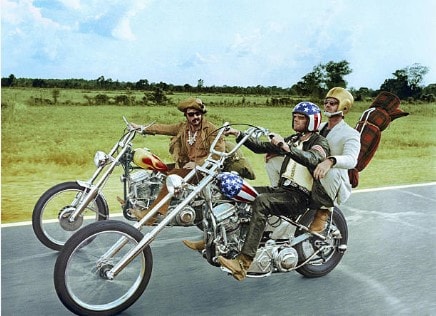
Easy Rider's Long Shadow on American Cinema
The road movie as a genre owes everything to a single film. We trace its influence through a decade of highway storytelling.
Smokey and the Bandit: America's Love Letter to the Open Road
It was fast, loud, and completely unserious — and it captured something true about freedom, speed, and the American highway.