Aviators, Wayfarers, and the Golden Age of Eyewear
The right pair of sunglasses said everything. We look back at the frames that defined the era's effortless cool.
The aviator had been around since World War II, when Bausch & Lomb designed them for military pilots. But it took the 1970s to make them a cultural icon. By mid-decade, the teardrop-shaped frames with their gold or silver rims were everywhere — on highway patrolmen and rock stars, on the faces of the men who defined the era's particular brand of cool.
The Wayfarer arrived in 1956 but found its moment in the early 80s. Ray-Ban's decision to place them on Tom Cruise in Risky Business (1983) and on the Blues Brothers (1980) turned a declining product into a cultural phenomenon. Sales went from 18,000 pairs a year to 1.5 million. The Wayfarer became the sunglasses of the decade — worn by everyone from college students to rock stars to the President.
Sunglasses were the one piece of fashion that worked for everyone. Put on the right pair and you were, briefly, exactly who you wanted to be.
What made sunglasses so central to the era's style was their democratic accessibility. You didn't need money to look good in sunglasses. A $15 pair from a gas station rack could give you the same silhouette as a $200 pair from an optician. The frame was the thing. The attitude was free.
There was also something about sunglasses that fit the era's emotional temperature. The 70s and 80s valued a certain kind of cool — not cold, but composed. Unreadable. The sunglasses were part of that. They let you look at the world without the world looking back at you. In an era before everyone was always on camera, that privacy had value.
The golden age of eyewear ended, as golden ages do, when it became too self-conscious. By the late 80s, sunglasses had become fashion accessories in the formal sense — branded, expensive, status-signaling. The easy cool of the aviator era gave way to something more calculated. But for a decade and a half, the right pair of frames was all you needed.
More from Fashion
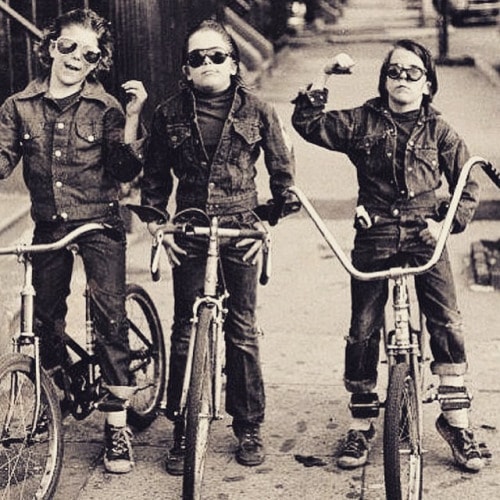
The Jean Jacket: America's Most Democratic Garment
From Springsteen to the kid next door, the denim jacket was the uniform of a generation that believed in looking like themselves.
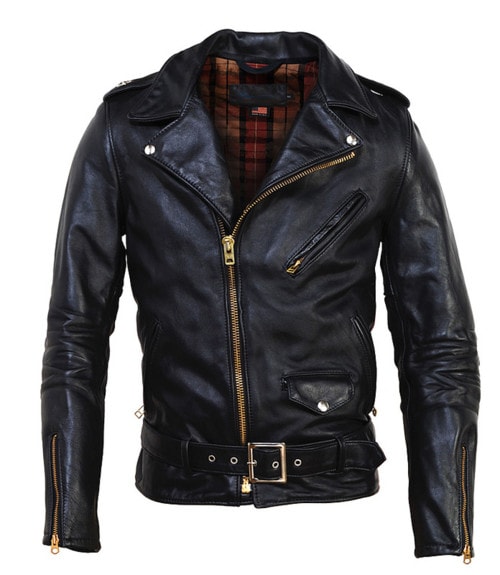
The Motorcycle Jacket and the Myth of the Road
It started with Brando, but by the late 70s it belonged to everyone. The leather jacket was freedom you could wear.